

Born in Manhattan, New York to Jewish immigrants in 1928, Stanley Kubrick’s path to becoming one of the most talented and recognise director in film history began when his father gave him a camera for his thirteenth birthday. Though intelligent, he never really do well in school, and his passion lying in photography, Kubrick would work as a photographer for Look magazine. In the next few years his interest turned to film and cinema as a voracious movie-goer. His first real work was when sank his life savings into making a documentary Day of the Fight in 1951, with many other commissioned documentaries to follow.
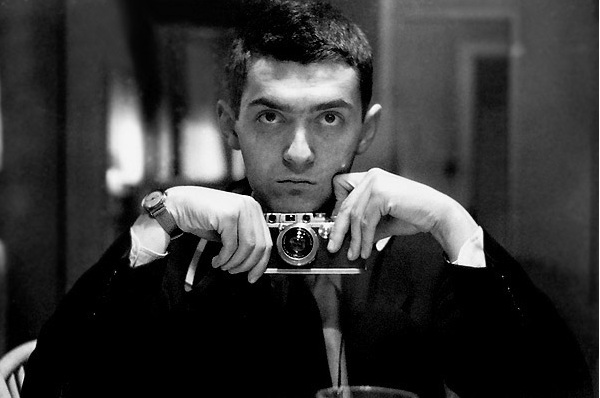
Early works
Though he did dabbled in films before, his career wouldn’t gain much traction until his two films Killer’s Kiss (1955) and The Killing (1956) got attention of Hollywood.


In 1957 he got a chance to work with the famous Kirk Douglas and directed the critically acclaimed yet controversial World War 1 drama Paths of Glory, one of his finest work. Later he was called upon to direct another Kirk Douglas film, Spartacus (1960),


Kubrick took complete control of the film and impose his ideas and high standard, upsetting the cruel his style of directing would become the reason why he is both loved and hated in the film industry.
Goodbye Hollywood
After the failed project with Marlon Brando in One-Eyed Jacks (1961), and another failed marriage, Kubrick grew tired of Hollywood and moved permanently to England, where he would make all his films to follow.


His first film after moving the the UK would be the controversial romantic drama Lolita (1962), based on a novel of the same name by Vladimir Nabokov. But Kubrick history of controversial and daring films is just beginning, as his next work would be his most risky yet as he made fun of the looming threat of nuclear war in his dark satire comedy film Dr. Strangelove or: How I Learned to Stop Worrying and Love the Bomb (1964). Originally wanting it to be drama, Stanley couldn’t help himself as his ideas were too funny to be taken seriously. The film’s success gave Kubrick the financial and artistic freedom to work on any project he desired.
To Jupiter And Beyond
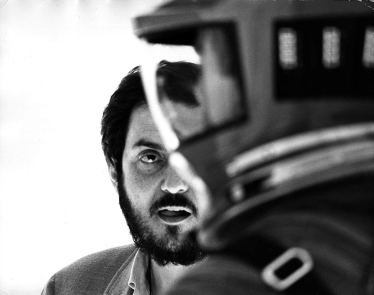
In collaboration with the renowned sci-fi author Arthur C. Clark, his next work would shake the ground of the film industry as his most influential and well-known work 2001: A Space Odyssey (1968) changed how people see sci-fi as a genre and how they see film as a medium forever. And instant classic that set the standards for many sci-fi films that follow, 2001 is undeniably one of his best works and one of the best sci-fi films ever. Of all time. Kubrick would however step into the light of controversy yet again when his ultra-violent dark comedy film A Clockwork Orange (1971) hit the theatres, shocking many movie-goers with its portrayal of sex, rape, violence, mental illness, and more. Thankfully, his next work took a little break from this with the painting like beauty of Barry Lyndon (1975). By this time his reputation of commitment and demands as a perfectionist to the cast and crew has become legendary. Requiring actors and actresses to perform dozens upon dozens of takes until he gets that one perfect scene is probably one of his most infamous and hated characteristics.


He would take his directing style ten steps further when he began his work on yet another classic starring Jack Nicholson and Shelly Duvall, The Shining (1980) which to this day is still considered one of the best horror film ever made. Based on the book of the same name by Stephen King, who has publicly stated more than once that he hated the film adaptation, The Shining is well-known not only for the horror on screen but also the horror on set when Shelly Duvall broke down in tears due to Kubrick’s rigorous and unending demands. Jack Nicholson would always say that this film was the hardest and most demanding film he ever worked on.


Kubrick would stepped into the genre of war films again with his Vietnam war drama, Full Metal Jacket (1987) that would continue his legacy of critical and commercial success, further solidifying his place as one of the best director the film industry ever known.


Later years
After the success of Full Metal Jacket, Stanley Kubrick would face many failures and obstacle as he worked on a new sci-fi film “Artificial Intelligence (AI)”, but the slow progress of its pre-production caused Kubrick to put the project aside as he decided to wait until the special effects technology was up to the standard the Kubrick wanted for what could have been his best work yet. His other projects would not fair better when his “Napoleon” died even before it’s pre-production and “Wartime Lies”, also known as “The Aryan Papers” was abandoned due to Steven Spielberg’s Schindler’s List (1993), which covered much of the same material.
His next complete work would arrived many years later with the yet again controversial Eyes Wide Shut (1999), starring Tom Cruise and Nicole Kidman. Kubrick claimed that it was his best work yet.


After Eyes Wide Shut, Stanley Kubrick immediately began his work on his long awaited project Artificial Intelligence: AI (2001) but he would not see the film to its completion when he tragically suffered a fatal heart attack and passed away on March 7th, 1999.


After Stanley Kubrick’s death, Steven Spielberg, who had been a friend to Stanley, took over the project as the film’s director and completed the last first Kubrick ever worked on. His visions for the film and what he would think of the finished product will remain a mystery forever, but one thing that’s certain is that Stanley Kubrick has left his mark on the film industry and will also be one of the best director in history.


Written by Krongfah Mahankalarp, Writer At Day X Productions



 Day X Reviews Extended : Film Reviews & Recommendations